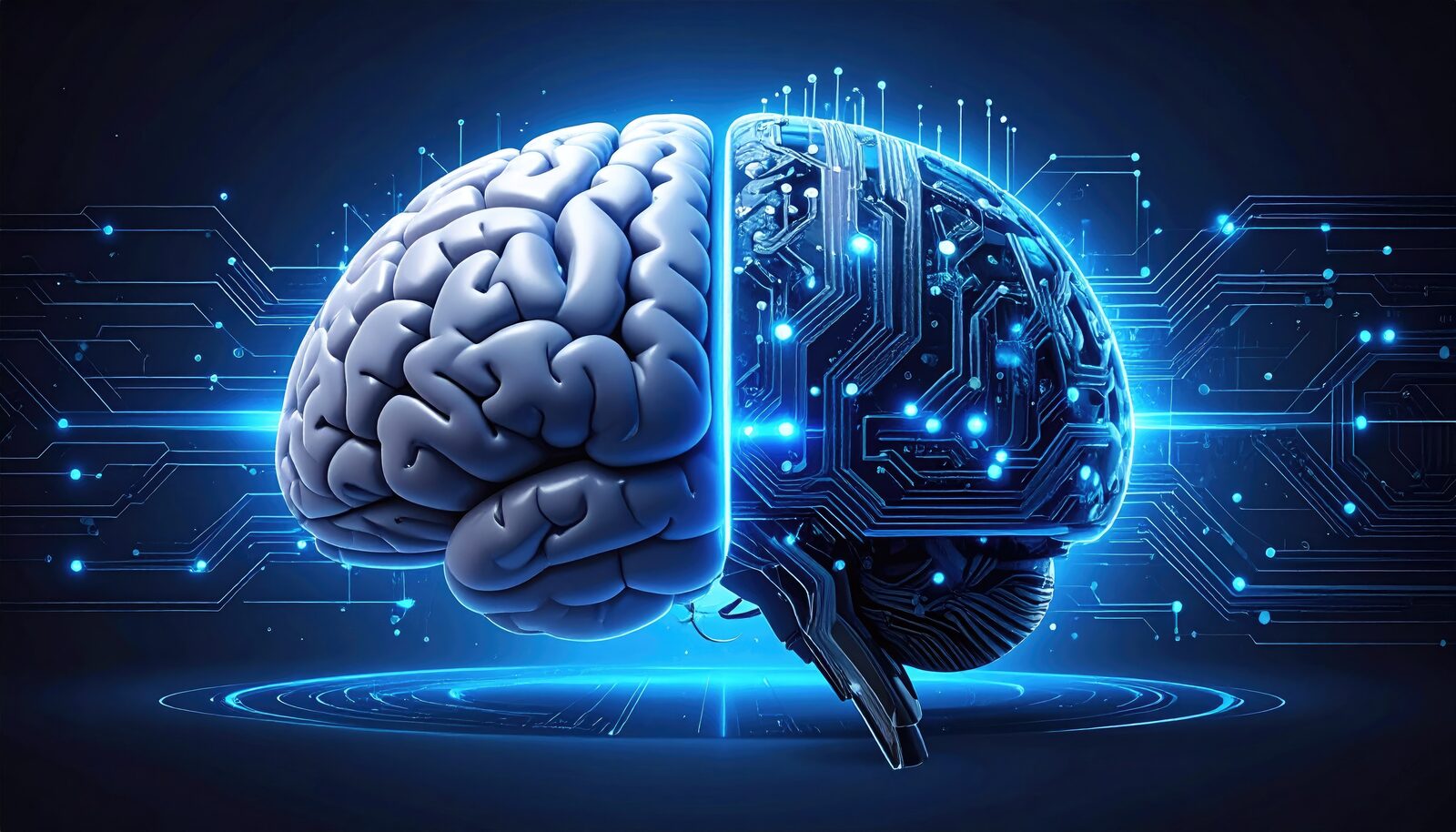
Menti ibride: la mente estesa e il rischio dell'offloading cognitivo
Da quando esistono gli strumenti, pensiamo anche con essi. L'AI è la protesi cognitiva più potente mai costruita: può renderci più capaci o più pigri. La differenza è l'intenzione.
CM
Di Redazione Core Matrix11 giugno 2026 · 3 min di lettura · Aggiornato il 19 giugno 2026
Nel 1998 i filosofi Andy Clark e David Chalmers pubblicarono un saggio destinato a fare scuola, "The Extended Mind" (Analysis, 58/1). La tesi è tanto semplice quanto spiazzante: la mente non finisce ai confini del cranio. Quando un uomo con problemi di memoria, Otto, affida a un taccuino le informazioni che gli servono, quel taccuino svolge la stessa funzione della memoria biologica — ed è, a tutti gli effetti, parte del suo sistema cognitivo. Gli strumenti, in questa lettura, non sono solo aiuti esterni: diventano pezzi del pensiero.
Se accettiamo questa premessa, l'intelligenza artificiale generativa è la protesi cognitiva più potente che abbiamo mai costruito. E ripropone, ingigantita, una domanda antica: cosa succede a una capacità quando smettiamo di esercitarla?
Gli strumenti non sono solo aiuti esterni: diventano pezzi del pensiero.
L'effetto Google, vent'anni dopo
Una traccia la diede uno studio pubblicato su Science nel 2011 (Sparrow, Liu e Wegner): quando sappiamo che un'informazione resterà disponibile online, tendiamo a ricordare dove trovarla piuttosto che l'informazione stessa. È il cosiddetto "effetto Google".
Il punto importante è che non si tratta di un danno, ma di uno spostamento: la memoria diventa transattiva, distribuita tra noi e i nostri strumenti. E delegare la memoria, del resto, non è una novità. Lo facciamo dall'invenzione della scrittura, molto prima dei motori di ricerca.
La domanda nuova: e se a delegare è il ragionamento?
La questione si fa più delicata quando a essere esternalizzata non è la memoria ma il pensiero. Uno studio presentato alla conferenza CHI 2025 (Lee e colleghi, Microsoft Research) ha rilevato che, tra i lavoratori della conoscenza, una maggiore fiducia nell'AI generativa si associa a un minore impegno nel pensiero critico — mentre una maggiore fiducia nelle proprie capacità lo aumenta.
Un dato che va però letto con prudenza: è un'indagine basata su auto-valutazioni, non la misura di un calo cognitivo. La differenza non è secondaria, perché ciò che le persone dichiarano di fare non sempre coincide con ciò che accade nei loro processi mentali.
Sulla stessa linea si colloca un discusso preprint del MIT Media Lab del 2025, che ha riportato differenze nell'attività cerebrale (EEG) tra chi scriveva con e senza assistente AI, coniando l'espressione "debito cognitivo". È un risultato suggestivo ma preliminare: condotto su pochi soggetti e non ancora sottoposto a revisione paritaria. Significativo che siano stati gli stessi autori a mettere in guardia contro le interpretazioni allarmistiche.
In sintesiTre tappe scandiscono il dibattito: nel 1998 Clark e Chalmers teorizzano la mente estesa; nel 2011 lo studio su Science descrive l'effetto Google e la memoria transattiva; nel 2025 la ricerca CHI di Microsoft e il preprint EEG del MIT Media Lab — entrambi prudenti e non conclusivi — spostano la domanda dalla memoria al ragionamento.
Strumento o stampella
La storia consiglia equilibrio. La calcolatrice non ha ucciso la matematica; ha liberato energie per problemi più alti. L'offloading cognitivo non è di per sé un male: è ciò che permette alla mente di concentrarsi su ciò che conta.
Il rischio, allora, non è usare l'AI: è usarla al posto del pensiero anziché insieme al pensiero — accettarne l'output senza verificarlo, smettere di formulare le domande, delegare il giudizio. Sono tre gesti diversi, e tutti e tre svuotano dall'interno la competenza che dovrebbero potenziare.
Le menti ibride che stiamo diventando possono essere più acute o più pigre. La differenza non la fa la tecnologia, la fa l'intenzione: usare l'AI per redigere e non per decidere, per esplorare e non per sostituire, mantenendo allenate le competenze a cui teniamo. Pensare con una macchina è una possibilità straordinaria — a patto di continuare, davvero, a pensare.
In 1998 philosophers Andy Clark and David Chalmers published a landmark essay, "The Extended Mind" (Analysis, 58/1). The thesis is as simple as it is unsettling: the mind does not end at the skull's boundary. When a man with memory problems, Otto, entrusts the information he needs to a notebook, that notebook performs the same function as biological memory — and is, to all effects, part of his cognitive system. Tools, on this reading, are not just external aids: they become pieces of thought.
If we accept that premise, generative artificial intelligence is the most powerful cognitive prosthesis we have ever built. And it raises again, magnified, an old question: what happens to an ability when we stop exercising it?
Tools are not just external aids: they become pieces of thought.
The Google effect, twenty years on
A clue came from a study published in Science in 2011 (Sparrow, Liu and Wegner): when we know information will remain available online, we tend to remember where to find it rather than the information itself. This is the so-called "Google effect".
The important point is that this is not harm but a shift: memory becomes transactive, distributed between us and our tools. And delegating memory, after all, is nothing new. We have done it since the invention of writing, long before search engines.
The new question: what if we delegate reasoning?
The matter becomes more delicate when what is externalized is not memory but thinking. A study presented at the CHI 2025 conference (Lee and colleagues, Microsoft Research) found that, among knowledge workers, greater trust in generative AI is associated with less effort in critical thinking — while greater confidence in one's own abilities increases it.
This is a finding to be read with caution: it is a self-report survey, not a measurement of cognitive decline. The distinction is not minor, because what people say they do does not always match what happens in their mental processes.
In the same vein sits a much-discussed 2025 MIT Media Lab preprint, which reported differences in brain activity (EEG) between those writing with and without an AI assistant, coining the phrase "cognitive debt". It is a suggestive but preliminary result: conducted on few subjects and not yet peer-reviewed. Tellingly, it was the authors themselves who warned against alarmist readings.
TimelineThree milestones mark the debate: in 1998 Clark and Chalmers theorize the extended mind; in 2011 the Science study describes the Google effect and transactive memory; in 2025 Microsoft's CHI research and the MIT Media Lab EEG preprint — both cautious and inconclusive — shift the question from memory to reasoning.
Tool or crutch
History advises balance. The calculator did not kill mathematics; it freed energy for higher problems. Cognitive offloading is not inherently bad: it is what lets the mind focus on what matters.
The risk, then, is not using AI: it is using it instead of thinking rather than alongside thinking — accepting its output without checking it, ceasing to formulate the questions, delegating judgment. These are three distinct gestures, and all three hollow out from within the very skill they should strengthen.
The hybrid minds we are becoming can be sharper or lazier. The difference is not made by technology, it is made by intention: using AI to draft and not to decide, to explore and not to replace, keeping trained the skills we care about. Thinking with a machine is an extraordinary possibility — provided we keep, truly, thinking.