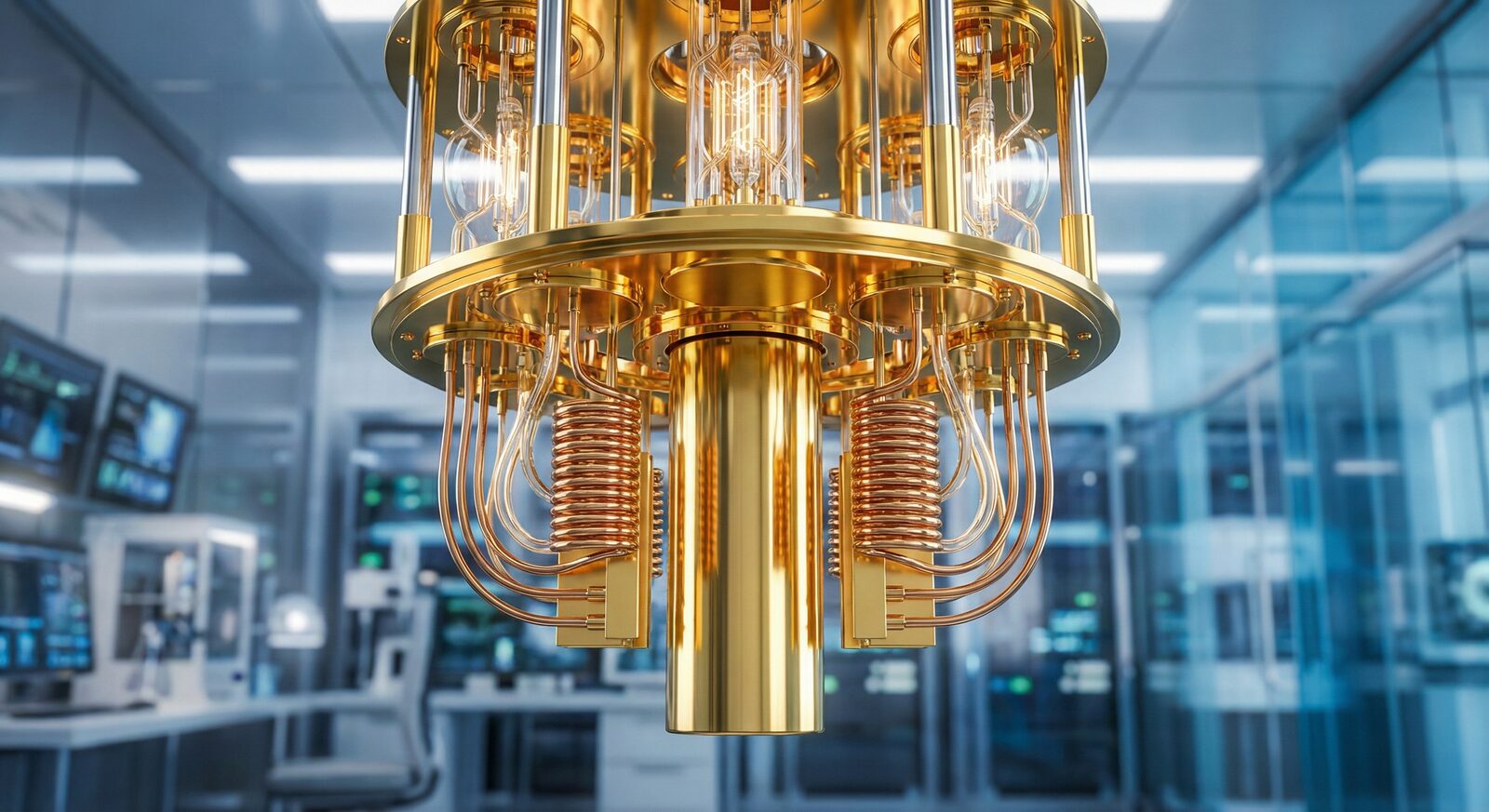
Quantum Space è il programma di approfondimento di Class CNBC dedicato al calcolo quantistico, in onda ogni martedì, condotto dal giornalista Emerick De Narda con Pierpaolo Marturano come esperto fisso e ideatore dei contenuti.
Una puntata speciale ha affrontato un tema inusuale per il calcolo quantistico: l'antitrust. A marzo 2026 l'Autorità Garante della Concorrenza e del Mercato (AGCM) ha aperto un'indagine conoscitiva sul mercato del quantum computing — la prima volta che l'antitrust italiana si occupa di questa tecnologia. Il segnale è chiaro: il quantum è uscito dal laboratorio ed è entrato nella politica industriale.
Il quantum è uscito dal laboratorio ed è entrato nella politica industriale.
Tre nodi competitivi
L'indagine mette a fuoco tre problemi. Il primo riguarda le barriere d'ingresso elevatissime: costruire un computer quantistico richiede capitali e competenze fuori dalla portata dei più, una soglia che da sola tende a concentrare il mercato attorno a pochi attori capaci di sostenerla.
Il secondo è la difficoltà a definire i mercati di una tecnologia ancora in formazione. Senza confini netti su cosa sia il prodotto, su chi siano i concorrenti e su dove finisca un mercato e ne cominci un altro, anche gli strumenti tradizionali dell'analisi della concorrenza faticano a fare presa.
Il terzo è il rischio di gatekeeping. Il modello "quantum-as-a-service" abbatte i costi d'accesso, e in questo senso democratizza l'uso della tecnologia, ma può creare dipendenza tecnologica e contrattuale: fino al rischio che il quantum diventi un semplice modulo dentro ecosistemi cloud già dominanti, invece di un mercato autonomo e contendibile.
Regolare prima, non dopo
Lo sfondo è la corsa ai brevetti e l'acquisizione precoce di startup da parte dei giganti, una dinamica che tende a chiudere gli spazi competitivi prima ancora che il mercato si sia formato del tutto. A questa si somma una dimensione strategica: molte applicazioni quantistiche sono dual-use, civili e militari, con un peso diretto sulla sovranità tecnologica europea.
La tesi della puntata è che intervenire ora, nella fase ancora aperta, è l'occasione per costruire mercati competitivi — perché agire dopo, quando il lock-in è consolidato, è molto più difficile. La finestra utile, in altre parole, è quella in cui le regole possono ancora orientare la struttura del mercato anziché limitarsi a fotografarla. L'Europa non può permettersi di arrivare tardi come accadde con i semiconduttori, il cloud e l'AI.
In sintesi A marzo 2026 l'AGCM ha aperto la sua prima indagine conoscitiva sul mercato del calcolo quantistico, mettendo a fuoco tre nodi competitivi — barriere d'ingresso elevatissime, difficoltà a definire i mercati e rischio di gatekeeping legato al modello quantum-as-a-service. Sullo sfondo, la corsa ai brevetti, l'acquisizione di startup da parte dei giganti e la natura dual-use della tecnologia, con l'obiettivo di regolare la fase ancora aperta prima che il lock-in si consolidi.
Quantum Space is Class CNBC's in-depth program on quantum computing, airing every Tuesday, hosted by journalist Emerick De Narda with Pierpaolo Marturano as resident expert and content creator.
A special episode tackled an unusual topic for quantum computing: antitrust. In March 2026 Italy's Competition and Market Authority (AGCM) opened a fact-finding inquiry into the quantum computing market — the first time Italian antitrust has addressed this technology. The signal is clear: quantum has left the lab and entered industrial policy.
Quantum has left the lab and entered industrial policy.
Three competitive knots
The inquiry focuses on three problems. The first concerns very high entry barriers: building a quantum computer requires capital and expertise beyond most players' reach, a threshold that on its own tends to concentrate the market around the few who can sustain it.
The second is the difficulty of defining the markets of a still-forming technology. Without clear boundaries on what the product is, who the competitors are, and where one market ends and another begins, even the traditional tools of competition analysis struggle to gain purchase.
The third is the risk of gatekeeping. The "quantum-as-a-service" model lowers access costs, and in that sense democratizes use of the technology, but it can create technological and contractual dependence: up to the risk that quantum becomes a mere module inside already-dominant cloud ecosystems, rather than an autonomous, contestable market.
Regulate before, not after
The backdrop is the patent race and the early acquisition of startups by the giants, a dynamic that tends to close competitive space before the market has fully formed. Added to this is a strategic dimension: many quantum applications are dual-use, civilian and military, weighing directly on European technological sovereignty.
The episode's thesis is that intervening now, in the still-open phase, is the chance to build competitive markets — because acting later, when lock-in is entrenched, is far harder. The useful window, in other words, is the one in which rules can still shape the structure of the market rather than merely photograph it. Europe cannot afford to arrive late as it did with semiconductors, cloud and AI.
In short In March 2026 the AGCM opened its first fact-finding inquiry into the quantum computing market, focusing on three competitive knots — very high entry barriers, the difficulty of defining the markets, and the gatekeeping risk tied to the quantum-as-a-service model. In the background: the patent race, the acquisition of startups by the giants, and the dual-use nature of the technology, with the aim of regulating the still-open phase before lock-in becomes entrenched.